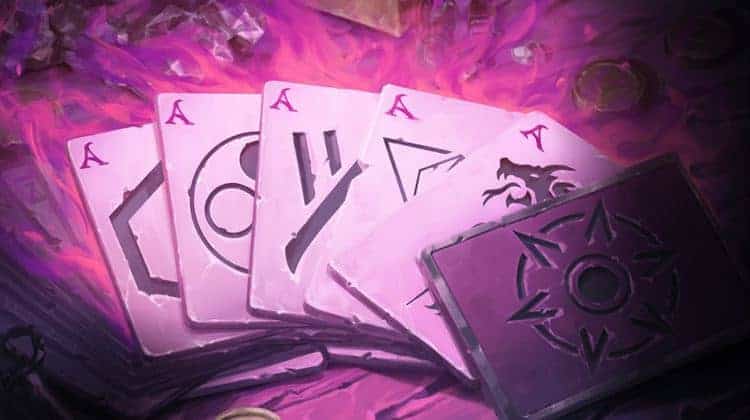
In any game of Gods Unchained that you have played or you are going to play you will have to face the phase of mulligan And believe me when I tell you that a player who is clear about how to approach this in the best possible way will maximize his chances of victory, since the early stages of the game can be decisive.
What is mulligan?
The mulligan it's him Step prior to the start of the game, when players visualize their starting hand and have the possibility to reject cards, looking for the best possible starting hand. For example, if you get 4 cards with a mana cost greater than 7, you probably don't want to keep any of them, as you won't be able to play them until the game is very late (at least until turn 9).
The first thing you should know is that It's not the same to play first as second. The player who starts can reject up to 3 cards, while the player who goes second can reject up to 4. If you're wondering where the cards you reject are, don't worry. They are not permanently removed, they simply return to your deck.
A very important issue that you should be clear about is that If you have two copies of the same card in your deck, rejecting it will not come out again during the mulligan. As a result, decks with two copies of most of their cards achieve more consistent results in this phase.
How to approach mulligan?
As for the form of To undertake the mulligan in the most successful way, the truth is that it is an art:
- Do you play first or second? It is essential that you keep this in mind, since if you are in second place you must be proactive and try to have reactive cards (for example, creatures or relics with Blitz, spells that allow you to neutralize threats quickly, etc.).
- Depending on your strategy, you may want to keep some cards that play a key role in your deck. For example, playing a deck with which you aspire to prolong the game to play cards with a high mana cost may want to keep a spell in hand that allows it to "clean" the board on turn 5, even if you can't play it immediately; or in a deck where you're looking for a certain combo, you might want to keep that key card... In an aggressive deck it could be a spell that empowers the creatures you have on the board to end the game as quickly as possible.
- What are you going to face? Depending on what you're playing and what you're going to be played, it may make more or less sense to keep a card in the mulligan. For example, if you're expecting a god who has plenty of low-cost relics, you'll probably want to keep a card that allows you to punish him when he equips one of them.
¿Talk English? Then I recommend this video from CopperPitch:
¿Talk Spanish? Then I recommend this video from Didactic:
To conclude...
Useful? Interesting? I hope so! Remember: if you want to improve your skills in Gods Unchained and enjoy the game like never before, it's very easy: subscribe now to the GU Masters newsletter, you have it just a click away: The Herald.
Images courtesy of Gods Unchained Pty Ltd.
- About the author
- Recent articles by the author

I'm the driving force behind GU Masters and my goal is to provide you with the resources you need to improve your skills and achieve your goals in the Gods Unchained universe. Do you already follow me on Twitch and YouTube?